

A man who looks suspiciously like Bill Hader but dressed as Marky Ramone wanders into an abandoned building, mumbling to himself about how much he hated being bossed around by the “do dis, do dat” screws while serving out a short prison sentence for drug possession. The strung-out and misanthropic psychopath in question is Terry Hawkins (Watkins), a pornographic filmmaker by trade when he isn’t peddling drugs, whose film career has gone nowhere due to a terminal lack of talent as every distributor has slammed a door in his face. Convinced the problem is them and not him, Hawkins has a new Benzedrine-induced plan for a different kind of kinky stag film to show off his true genius and garner some retribution from the world in general, who he thinks has wronged him en masse.


Thus and so, Hawkins sets out to round up a cast of similarly-minded degenerate acolytes to star in and crew his latest film, including a couple of burnt-out prostitutes, Kathy and Patricia (Curtin, Kanestro), an easily bullied sycophantic schlub named Bill Drexel (Schlageter) because he has the needed equipment, and Hawkins’ old buddy Ken Hardy (Fischer), a former slaughterhouse employee who also recently spent some time in the joint after being caught *ahem* performing a marital act with a dead cow. And in between cuts of slaughterhouse atrocity footage, we find out Hardy also starred in a few stag loops; and so he has an in with a pornographer named Jim Palmer (Pixley) -- this “in” being an ongoing sexual relationship with Palmer’s philandering wife and biggest star, Nancy (Vrooman), who likes it weird and rough.

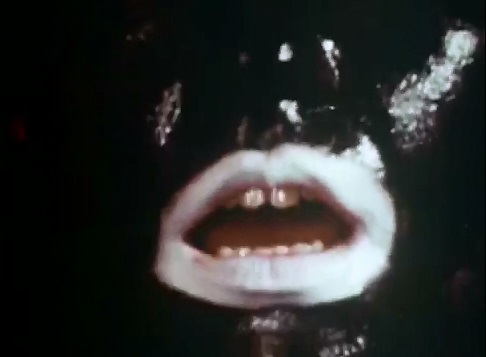

Now, Palmer was one of those folks who had refused to buy Hawkins’ earlier films, which causes a slight change in the script for Hawkins that we’ll get to in a second. For now, cut to the Palmer house where a decadent and depraved orgy is just starting to heat up. The main attraction? Palmer’s wife, currently decked out in black-face and being whipped bloody by a malicious hunchback -- much to the arousal of the victim and the gathered crowd as the camera is glued to her contorted face. Upstairs, Palmer is screening some new loops for his producer and distributor, Steve Randall (Sweet), who complains openly over the poor quality, and how audiences are growing bored with this same old same old, declaring they need something new, bold and freaky to knock the jaded raincoat crowd on its collective ass.


This they find with a new film by Hawkins, who introduces himself to Nancy as a mutual friend of Ken’s, which ends with both of them stripping down and screwing against a bathroom wall. After, he shows Nancy his latest opus: a short snuff film where two women and one man decked out in carnival masks taunt and then strangle and kill a blind hobo. Nancy is both disturbed and turned on by these images, thinking it looks too real. But she doesn’t believe Hawkins when he insists it was real -- and he oughta know, being the guy in the mask who strangled the old pervert. Turns out this is just part of Hawkins’ proposed film and he’s looking for investors for completion funds.


Last House on Dead End Street (1977) is another one of those movies that was always spoken of in hushed tones in my little glut of horror and grue fanatics while growing up. Of course, this was all based on what we'd read and rumor as none of us had actually seen it. And it was this scarcity that only added to the urban legend of this notorious film as for the longest time no one was really sure when it was made, where it was made, or even who actually made the infernal thing to begin with since everyone involved in the production worked under a pseudonym. And as decades passed and no one came forward, once you’ve experience the film, it was hard to disbelieve all those rumors this grisly exercise in death and gore might just be an actual bona fide snuff movie after all. But then in 2000, the true culprit finally raised his hand and identified himself, revealing the long and storied production history of this enigma of a film, which proved just as morbidly fascinating as the film itself.

Roger Watkins fell in love with the power of movies while watching 8mm cartoons projected on the wall of a friend’s basement. He was especially enamored with the frozen moments of time whenever the projector stopped on a certain frame. His parents indulged his passion, buying him a camera for his 10th birthday. His father worked for a film lab and provided a constant supply of stock and developed his son’s home movies for free, which included a few animated shorts, a tribute to Edgar Allan Poe, and in perhaps a sign of things to come, a short involving a limbless female mannequin breaking into a boy’s bedroom for a night of … exploration.

While studying literature at State University of New York, Watkins kept experimenting with film and drugs and making friends in the film department. This opened all kinds of doors, leading to a brief apprenticeship with Otto Preminger, even working as an editor on the irascible director’s Such Good Friends (1971). As a token of their friendship, Preminger gave Watkins a Bolex camera, which wound up playing a pivotal role in Last House on Dead End Street as the camera Bill Drexel uses on film to capture all the murder and mayhem. Shortly after, Watkins also spent some time with Nicholas Ray, who was a long way from Rebel Without a Cause (1955) at this point, essentially a burnt out drug addict who had been teaching a few film classes and was reduced to serving on panels judging foreign pornography. Here, Watkins, when not getting high on crystal meth with his new mentor, worked on Ray’s highly experimental film, We Can’t Go Home Again (1973); and it was around this time Watkins got the idea for his first feature when a foreign distributor at Cannes, where they were screening Ray’s film, suggested he make a movie about the Manson family.

Having read Ed Sander’s book, The Family -- a profile on the events leading up to the Tate-LaBianca murders and the arrest and trial that followed, Watkins was fascinated by these players, who killed without qualm, didn’t give a shit about anything and were afraid of nothing and ran with idea. And it’s not hard to connect the dots here, as Hawkins is easily a surrogate for Charles Manson, Hardy for Tex Watson, Drexel for Bobby Beausoleil, and the duo of murderous prostitutes are stand-ins for Susan Atkins and Patricia Krenwinkel. There was even a persistent rumor the Manson clan had stolen an NBC news van at some point and used the equipment inside to film their own snuff movies out at the Spahn ranch, films that have never surfaced -- if they ever existed in the first place. True or not, Watkins loved the idea and made his own merry clan a group of murderous filmmakers.


And with this thread of an idea, he secured a $1500 loan from his father, who was still providing free film and developing (-- making one wonder if he ever watched what he processed and worried about his son’s mental health), rounded up a bunch of volunteers from a local college, and started shooting in December, 1972, and wrapped in January of 1973. As the legend goes, Watkins, serving as producer, director, writer, cinematographer, editor and star, spent half of his meager budget on amphetamines to feed his voracious drug habit, which also had a definitive influence on the film, whose shooting title was At the Hour of Our Death. Shot in sequence the film gets more brazen and bizarre as it goes along. Almost all of the script was improvised on the spot and makes little sense. And as filming progressed the line blurred between Watkins and Hawkins. Actually, there was no line at all by most accounts, which say the burgeoning provocateur was a raging egomaniac, quick to temper, and prone to violent outbursts on set when anything failed to meet his standards. So high and out of control was he, it’s kind of a minor miracle that someone DIDN’T get killed.


With the director out of control both onscreen and off as we reach the extended climax, both actresses refused to let Watkins tie them down the way he wanted, fearing his verisimilitude would get the better of him. Restraints aside, those captured watch in horror as Hawkins and his masked crew first go to work on Suzie Knowles (Neumeyer), an actress he had requested Randall bring along. She is strung up and branded on the bosom with a hot iron before Hawkins slashes her throat for the camera’s unblinking eye. The camera is still rolling when Jim Palmer is put through a Fellini-esque wringer when he is forced to direct his own death scene, which leads us to the film’s most notorious sequence when Nancy wakes up tied to a table after her husband has been beaten to death.


Using smelling salts to wake her up, and with the camera right in her face, Hardy takes a blade and slices her face to ribbons. Then, as the victim screams, Hawkins takes up a hacksaw and gleefully chops both of her legs off. Very slowly. But whenever Nancy mercifully passed out from the pain, the smelling salts are applied again to keep her awake as this ghastly dismemberment continues unabated with the removal of an arm. This interlude finally ends when Hardy takes some gardening shears and eviscerates the captive, who watches as her attackers pull out her organs and start licking them, as if cleaning the afterbirth of some obscene newborn, until she finally expires -- and as if this whole sequence wasn’t hard enough to watch and endure, you realize this is probably Watkins’ Benzedrine-fueled take on the demise of Sharon Tate, who was nine months pregnant when she was stabbed to death, and then you kinda wanna take some high grade sand paper to your retinas and not stop until you reach the back of your skull.


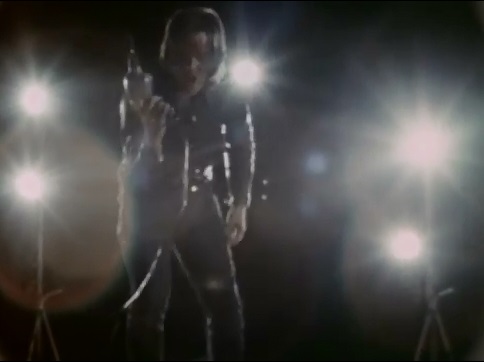
With Randall the only one left alive, he is chased around the building until caught and cornered in the basement. Here, in another bizarre twist, the two girls taunt the captive, with Kathy exposing her breasts while Hawkins keeps asking if all this makes Randall horny. She then unbuttons her pants, revealing a strap-on deer’s hoof, that Hawkins forces the last victim to fellate until he manages to escape. But again, he is herded right to where Hawkins wants him to be as a darkened refuge suddenly lights up with floodlights and we see Hawkins is there armed with a power drill, which he plunges into the victim’s eye, killing him. And then one by one, the masked killers slowly back away and disappear into the darkness. And as the film fades out, a stern voiceover claims Hawkins and his whole crew were later apprehended and are each now serving life in the state penitentiary.

Watkins original rough-cut of the film clocked in at an epic 175 minutes. (Rumors abound this extended cut was shown only once and caused a riot that destroyed the venue.) This was later trimmed down to 115 minute version called The Cuckoo Clocks of Hell, inspired by the universal chaos theory of Kurt Vonnegut, that was set for, believe it or not, a screening at Cannes but this never happened because Watkins got hit with a lawsuit that tied the film up in litigation for nearly three years. Seems the suit was filed by actress Barbara McGraw over the use of some hardcore loops Watkins had shot of her that wound up in the film that she didn’t sign off on. The case went all the way to the New York Supreme Court, which found in favor of Watkins. With the film now free and clear but needing money for legal fees (and more drugs most probably), Watkins sold the film off for nearly nothing to a fly by night company called Warmflash Productions, who let it set on the shelf for almost a year before selling it off to LBS productions in 1977, who chopped it down to 77 minutes, re-edited it, re-dubbed it (-- quite horrifically, as the barely synced sound is both laughable and added fuel to the speculation that this was originally a foreign film), fabricated a new batch of credits, and added that final voiceover before sending it off on a tour of southern drive-ins under the title The Funhouse.

The film resurfaced again in 1979 in the grindhouses of 42nd Street, NYC, finally released under its most well known title: Last House on Dead End Street; an obvious case of title recognition groping at Last House on the Left (1972). And here, in perhaps the strangest case of art imitating life, Watkins came back into the picture when a complete stranger recognized him on the street as that guy in that movie who killed some broad and threw animal guts around. (Other versions say the man who cut the new trailer for the film knew Watkins, recognized him, and tracked him down.) See, back in 1973 Watkins thought his deranged opus would be his ticket to kick in the doors of Hollywood. When that didn’t pan out he did find a modicum of success as a pornographer, cashing in on the fading porno-chic era with Her Name Was Lisa (1980), Corruption (1983) and Midnight Heat (1983). Recognizing the film the stranger/old friend was describing, Watkins managed to track it down. And while he was thrilled with the visceral reaction of the audience he was not amused by all the changes made to his movie -- especially that tacked on coda, feeling it ruined the whole thing.

After Last House on Dead End Street played out the string in theaters it did manage a limited home video release on VHS through Sun Video. But when Sun Video folded, so did the film, surviving mostly via word of mouth, rumor, and a notorious Venezuelan bootleg tape, whose dub of a dub murk and obscuring subtitles only added more intrigue to the origin of the film as it lapsed into obscurity and became the stuff of cinematic legend, leaving people to wonder who this director Victor Janos was, or what else Brian Laurence had written, or find anything else Steven Morrison had starred in -- not realizing they were all the same person.


Not long after Watkins came forward Barrel Entertainment released the 77 minute version of Last House on Dead End Street on DVD in 2002, using the only known remaining 35mm print, which was missing almost a minute and a half of Nancy Palmer’s disemboweling, cut to avoid an X-rating back in ‘77. But Barrel restored the scene using an uncut VHS master. This DVD is long out of print and stupid expensive, but luckily, Vinegar Syndrome has announced that it will be releasing the film again as soon as it finishes its restoration, which, to my mind, is counter-productive as this film was not meant to be seen clean and pristine. Which begs the question, Who does this total mind-f@ck of a film owe the biggest debt to? As Daniel Stillings points out in his review at UK Horror Scene, “It is most likely that the aura that has surrounded this picture for the last 37 years is due to its reputation as a compact, nasty little 78 minute exploitation film that pays off its shoddy build up with an utterly memorable climax, a film molded by it's distributor, not it’s director."


Over the past few years I have finally managed to watch the 77-minute version of Last House on Dead End Street and a rip of the 83-minute Venezuelan VHS release. And so, I can say the film's notorious reputation is fairly well-earned but might also be a tad counter-productive in the 'expectations be a bitch' department. The first half of the film is a mess, amateurish, and needling into the insufferable red-zone of pretentious art house drivel. Continuity? Forget it. Every character we meet is repellent, and everything they do is even more so. But the second half is the stuff of nightmares. There is no subtext to get in the way of this unholy war of gorenography centered around a bloody vendetta between factions of bottom-feeders that live by a golden rule: what goes around comes around. It’s the world’s most nihilistic stag loop; an exercise in Grand Guignol with a vengeance; a waking night terror that’s less of a film and more of a staged blood ritual filled to the brim with bad mojo that just leeches off the screen, invoking -- honestly, something I’d rather not contemplate.


Even to the most hardened fans Last House on Dead End Street is an exhausting experience as the lurid execution and the resulting sleazy verisimilitude results in something rather queasy and disquieting. Glad to have finally crossed it off the list. Probably won't be revisiting it again anytime soon, but it’s definitely worth a look for those others similarly afflicted with affection for these kind of gory gonzoid genre films who not only live up to their reputation but exceed it.

What is Hubrisween? This is Hubrisween. And now, Boils and Ghouls, be sure to follow this linkage to keep track of the whole conglomeration of reviews for Hubrisween right here. Or you can always follow we collective head of knuckle on Letterboxd. That's 12 down with 14 to go!

The Last House on Dead End Street (1977) Production Concepts Ltd. :: Today Productions Inc. :: Cinematic Releasing Corporation / P: Roger Watkins / D: Roger Watkins / W: Roger Watkins / C: Ken Fisher / E: Roger Watkins / M: James Flamberg, Roger Watkins / S: Roger Watkins, Ken Fisher, Bill Schlageter, Kathy Curtin, Pat Canestro, Steve Sweet, Edward E. Pixley, Nancy Vrooman, Suzie Neumeyer


