Showing posts with label The Cult Movie Project. Show all posts

Wednesday, March 30, 2016

Mission Failure :: Is the End of The Cult Movie Project?


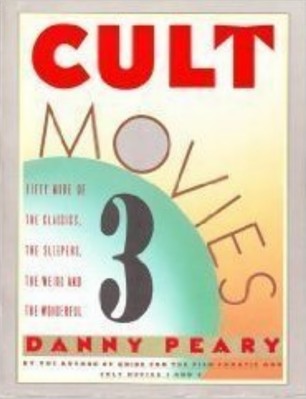
It began, as always, with good intentions. And it ended, almost equally as always, in disaster -- dashed upon the rocks of biting off more than I could chew and then laid waste by a combination of procrastination and being too easily distracted by other things. (SQUIRREL!) Thus, The Cult Movie Project, a noble effort to watch and write-up all 200 films author Danny Peary threw a spotlight on in his indispensable triumvirate of movie tomes, Cult Movies, Cult Movies 2, and Cult Movies 3, in one calendar year, that officially launched last March, crashed and burned and cratered deep into the earth as the year progressed and finally fizzled out Thanksgiving last.


Okay, okay, it’s not as dramatic as all of that. Essentially, what happened was I committed to this fool’s journey without really doing the math. (200 films divided by 52 weeks equals nearly four write-ups every seven days.) And so, in an effort to stay on schedule, I plowed into the films with much gusto and got into a pretty decent writing groove as well. Alas, other things kind of got in the way, from health woes to putting it on hold to participate in things like Hubrisween last October on top of several other blogathons suddenly had me finding myself nearly ten to fifteen films watched ahead of the last one I’d actually written up. And as that gap grew bigger and bigger, it got to the point where I had to start rewatching things, which, of course, made the situation even worse before officially blowing the schedule all to hell -- and rather irrevocably.


And so, what started out as something ambitious but a lot of fun, suddenly turned into a headache and a lot of work. It did not help that the reviews themselves also got out of hand and a lot more involved and far more in-depth than I had ever intended. Two to three paragraphs tops, and that was supposed to be it, suddenly turned into full, kitchen-sink reviews with accompanying art. *sigh*


And so, and so, here we are, with just under sixty Cult Movies watched with only 21 written up. (See what I mean about the gap there?) This, is too bad as I really enjoyed the watching (and even to an extent writing these films up), especially the ones I hadn’t gotten around to yet or the ones I had only seen through the miracle of pan’n’scan VHS tapes or on the late, late show.


So what now? Honestly, I’m not sure. My home, and this world wide web, are littered with projects started but never completed by me, myself and I. Sorry, that’s just how we roll. (It’s a character flaw, I know.) I might take another run at it, but pare it down, and take them one book at a time. I also may just do this for my own viewing enjoyment and nix any reviews altogether. Or I might start posting them in bunches, streamlined, like with my recommendations. Maybe. We’ll see, as the one thing this endeavor has taught me -- no blanket commitments; it always ends in ruination, tears, wailing and gnashing of teeth, and the last thing I want to do is bring any form of resentment against these films or the source material that spawned this inevitable disaster to begin with. No, that's all totally on me. 


Sunday, November 29, 2015

Cult Movie Project #21 (of 200) :: Best Viewed in a Subaru: Artie and George Mitchell's Behind the Green Door (1972).

___  ___  ___  ___  ___  ___  ___  ___  ___  ___  ___  ___  ___  ___
 x
"Ladies and gentlemen, you are about to witness the ravishment of a woman who has been abducted; a woman whose initial fear has mellowed into expectation. No harm will come to those being ravished. Tomorrow she will know that she has been loved as she has never been loved before..." 
___  ___  ___  ___  ___  ___  ___  ___  ___  ___  ___  ___  ___  ___

Okay, then, quick and dirty: The origin of the ribald tale that inspired our *ahem* seminal adult film is shrouded in mystery. Most sources date it back to World War II; theater of operation unknown, service unknown, author unknown, which was then circulated around via word of mouth or carbon copies; 16 pages in total, one-sided type, that managed a life all its own, passed down for nearly thirty years, until the Mitchell brothers, Artie and Jim, latched onto it and helped launch the Golden Age of Porn when their adaptation of Behind the Green Door was filmed and released in late 1972.


Based out of San Francisco, the Mitchells ran their business out of the O'Farrell Theater, which they opened in 1969, shooting the product in a makeshift studio upstairs and then showcasing it downstairs. By most accounts, their films -- glorified stag loops, really -- ranged from "mediocre to atrocious" (-- a running family joke said the only 'art' in porn was Brother Art). Despite a ton of legal hassles and constant strong-arming by the mafia, who were trying to cut into their profits, the brothers expanded, opening several more X-Rated theaters around California. And after the Supreme Court handed down their decision on Miller vs. California, which redefined the country's obscenity laws, with their product now legalized, the Mitchells decided to take a chance and go all out and spent $60,000 on a feature-length hardcore film.


Marilyn Chambers, meanwhile, was a New York model who aspired to be an actress. Before appearing in Behind the Green Door, her biggest claim to fame had been being the Ivory Snow Girl -- billed as "99 and 44/100% pure". Then, after landing a small role in The Owl and the Pussycat (1970) and the lead (as Marilyn Briggs) in (future Friday the 13th guru) Sean S. Cunningham's skin-flick, Together (1971), Chambers moved to San Francisco, where she saw an advertisement looking for talent for "a major motion picture". But upon arriving at the Mitchell's audition, she discovered the true nature of the film and started looking for the nearest exit. Stories conflict on what happened next: either the producers liked her wholesome look and her resemblance to Cybil Shepherd and gave her the hard sell, or they recognized her from Together and offered her the lead.


Though "turned on" by the plot, fearing the role might ruin her chance at a legitimate film career, Chambers initially balked, agreeing to a bit part, until she was eventually coaxed into playing Gloria Saunders after they met her demands of a $25,000 salary, a percentage of the film's profits, and that everyone she was to have intercourse with be tested and cleared of any STDs. (It should be noted that Chambers has not one single line of dialogue in the entire film, unless panting and moaning counts.) It wasn't until the film was in the can that Chambers revealed to her producers that she was the Ivory Snow Girl, which the Mitchell's exploited in their promotional campaigns, triggering one massive shit-storm at Procter and Gamble, resulting in a scandal and a nationwide product recall. And along with Deep Throat (1972) and The Devil in Miss Jones (1973), Behind the Green Door managed a national release in '73, out of the grindhouses and into the mainstream, and for a brief period pornography became a legitimate theatrical experience: porno chic.


The film itself is not very substantial; about ten minutes of avocado-toned, extremely clumsy, and slightly pretentious set-up followed by an hour of escalating and acrobatic intercourse. The story is told in flashback and is based on the misconception that there is such a thing as a consensual rape. However, after contemplating on what little plot there is, I think there's a distinct possibility that the kidnap victim (Chambers) put on display for an enraptured "secret sex society" audience and the man who "rescues" her at the end (McDonald) of her ravishment are in on it, already a couple, maybe even married, and this is some kind of kidnap / rape fantasy wish-fulfillment. (The M.C. at the Green Door Club, when describing what's about to happen, appeals to the audience to not freak out if they recognized any of the players on stage.) Maybe. I don't know. (That's me shrugging right now.)


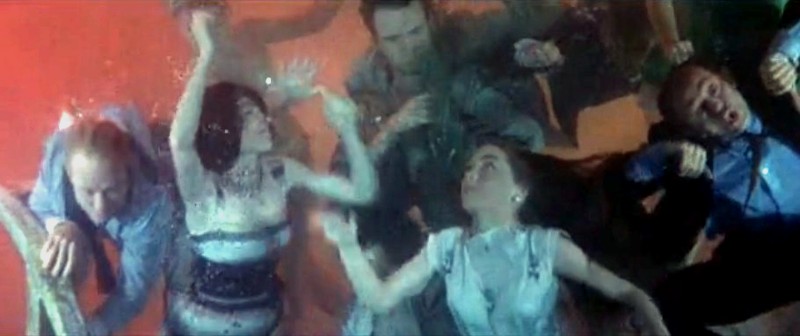
The sex-acts themselves, daring in their homosexual and interracial proclivities, are staged like some kind of brain-damaged Busby Berkeley production number until we reach the, oh god, *sigh* climax, where the Mitchell's pay homage to, I assume, Stanley Kubrick; namely, the Stargate sequence from 2001:A Space Odyssey (1968). Here, it’s a solarized sperm odyssey that plays out -- and out, and out and out and out and out and out and out and out and out and out-- just as stupidly as it sounds.


Look, let me be honest: I'm not a huge fan of hardcore. In fact, unless we're talking about something completely whackadoodle like Bill Osco's Flesh Gordon (1974) or Alice in Wonderland (1976) or completely off the rails like the Findlay's Flesh trilogy (1967-68), where there's a plot, demented though it may be, that moves the porn along, and not just the act itself, then I'm not a fan at all. It's not entertainment. It's anatomy and gynecology. And I find that both excruciatingly tedious and extremely boring, making it a slog to sit through. (My notes from the film are as follows: avocado; Ben Davison, What are you doing in this?; oh, great, a mime. And that's it.) 


If it is your thing, more power to you. Honest. It just isn't my thing and Behind the Green Door definitely falls into that category, meaning I'm glad its crossed off the list and I will never have to darken this shaded door again. 


* * * * * * * * * * * * * * * * * * * * * * * * * * * * * * * * * * * * * * * * * * * * 
xx 
“To me, Behind the Green Door is just an elaborate stag film, and more boring than many of that dreary lot. But it does have special appeal to many people, including those women who prefer sex films to be erotic rather than raunchy like Damiano's Deep Throat. I don't find Green Door erotic, but at least that is what the Mitchell brothers strived for. Damiano, on the other hand, worked for impact. He hoped that his strong images would elevate his films to the top of the porno list and force critics to consider them legitimate independent productions -- thus making them commercially more viable in terms of distribution. At least the Mitchell brothers, while entrepreneurs, seems as concerned with artistry as with making money.”

 XXXXXXXXXXXXXXXxxxxxxxxxXXXXXXX-- Danny Peary 
xx 
* * * * * * * * * * * * * * * * * * * * * * * * * * * * * * * * * * * * * * * * * * * *

The Fine Print: Behind the Green Door was watched in a darkened living room with the curtains closed via a DVD-R bootleg from a source that would like to remain anonymous. Watched as a Mansfield-Chambers Taboo-Breaking Sex-Symbol double-feature with Frank Tashlin's The Girl Can't Help It (1956). What's the Cult Movie Project? That's 21 down, with 179 to go.


Behind the Green Door (1972) Cinema 7 Film Group :: Jartech :: Mitchell Brothers Film Group / P: Artie Mitchell, Jim Mitchell / D: Artie Mitchell, Jim Mitchell / W: Artie Mitchell, Jim Mitchell / C: Jon Fontana / E: Jon Fontana / M: Daniel Le Blanc / S: Marilyn Chambers, George S. McDonald, Johnnie Keyes, Elizabeth Knowles, Ben Davidson

Tuesday, November 10, 2015

Cult Movie Project #20 (of 200) :: Some Like it Hotter and that Certain Itch You Just Can't Scratch: Frank Tashlin's The Girl Can't Help It (1956)


Wanting to turn his latest in a long string of girlfriends into a singing sensation, mobster Marty "Fats" Murdock (O'Brien) must scrape the bottom of the talent agent barrel due to a lack of any perceivable vocal talent exhibited by his main squeeze. Thus, Tom Miller (Ewell), wanting to keep his kneecaps intact, crawls out of a bottle long enough to shop Jerri Jordan (Mansfield) around to several hot night-spots to show off his client's *ahem* assets, which quickly negate her inability to carry a tune in a bucket and lands Jordan a recording contract. However, Miller soon realizes Jordan wants nothing to do with showbiz and is being pushed into it by Murdock as a vehicle to fulfill the mobster's own secret ambition to be a songwriter.


Blessed with a shrilly voice that can shatter glass, Jordan is reduced to just mimicking a wailing siren during each refrain of Murdock's number, a tune he wrote while serving a prison stretch, which Miller tries to sell to Wheeler (Emery), a former mob rival of Murdock's, who controls a payola monopoly over the jukebox trade. But Wheeler refuses to add the record to his playlist once he finds out who wrote it. Furious over this, and suspicious of the budding romance between Miller and Jordan, Murdock takes matters into his own hands and starts strong-arming his way into Wheeler's territory, forcing bar owners and restaurateurs to buy their jukeboxes from him instead. This causes Wheeler to hire some gunmen to rub-out Murdock, who is looking to rub-out Miller, who only wants what Jordan really wants, and what Jordan wants is to play house with him. And from there, all kinds of mayhem ensues...


After successfully making the jump from animated shorts to live-action motion pictures, Frank Tashlin was a bit of a rarity. A bit of a live-wire as well, Tashlin had worked for, quit on, got fired by, then rehired, only to quit or be fired again by nearly every major animation studio head: Paul Terry, Leon Schlesinger, the Fleischer brothers, Ub Iwerks, Walt Disney, and Screen Gems. Known to work fast and for infusing his own kooky sensibilities into his projects, during one of his many tenures at Warner Bros.' famed "Termite Terrace" (Looney Tunes, Merrie Melodies), Tashlin brought a sense of cinema to his shorts (-- odd camera angles, crash-cuts, montages, and vertical and horizontal pan and zooms); and together with Tex, Chuck, Bob and Friz, revolutionized the art-form and set the standard that has lasted to this very day.


After World War II (-- during which he contributed to those Private Snafu shorts), Tashlin gained some traction as a floating gag writer for the Marx Brothers, Red Skelton and Bob Hope, who asked him to help salvage a stagnant musical number for The Lemon Drop Kid (1951). Liking his pitch, Tashlin managed to leverage his way into directing his concocted "Silver Bells" sequence; and Hope was so happy with the end result, Tashlin was tagged to direct his next feature, the hilarious Son of Paleface (1952), which led to directing a feature for Martin and Lewis, Artists and Models (1955), they're best co-flick of ever. 


And with all the sight gags, garish colors, frenzied pacing, manic music, mixed with those colliding plot-lines twisted into pretzels, if those two features didn't prove you could take Frank Tashlin out of cartoons but you couldn't take the cartoon out of Frank Tashlin, then The Girl Can’t Help It (1956) made it an absolute fact chiseled into bedrock.


Theoretically based on the Garson Kanin novel, Do Re Mi, in actuality the film is more of a thinly disguised mash-up of Born Yesterday (1950) and The Seven Year Itch (1955), smushed together as a starring vehicle for Jayne Mansfield, who had just signed with 20th Century Fox as an insurance policy against their collapsing relationship with Marilyn Monroe. Here, reluctant gangster moll Mansfield is teamed up with a hapless talent agent, Tom Ewell (-- Monroe's tongue-wagging straight-man in The Seven Year Itch), at the behest of her boyfriend, Edmond O'Brien, who wants Ewell to turn her into a singing sensation (-- no matter that she has the vocal range of an avocado), or else. From there, Tashlin plays his well-endowed star (all 40-18.5-36 of her) as a mobile sight gag and a living, breathing double-entendre. And to her credit, Mansfield is keenly aware of this, I think, and plays it to the hilt. And how the hell they ever got that orgasmic, erupting milk-bottle gag past the censors is beyond me and anybody's guess.


I don't think any movie captures the loopy zeitgeist of the 1950s more than this film; an anthropological study of booming consumerism, mass-marketing, mass-psychosis, and the cultural obsession with image and the "in thing" that Tashlin takes to the woodshed and cynically lampoons and lambastes with the ferocity of a rabid badger armed with a pointed stick. And sticking with the popular trends of the day, The Girl Can’t Help It is also an astounding showcase for the burgeoning rock 'n' roll movement. 17 musical interludes are plugged into the plot, highlighted by the Platters, Fats Domino, Abbey Lincoln, Ray Anthony, Eddie Cochran, and Gene Vincent and the Blue Caps, all beepin', boppin' and potato chip'n along.


And then there's Little Richard, wailing the theme song to the rafters (-- written by Bobby "Route 66" Troup), bringing down the house each and every time. And while I think Tashlin was also attempting a Moe Howard eye-poke on the fad (-- especially during the rockabilly numbers), his spirited staging and the depth and texture of the CinemaScope and Deluxe Technicolor (which just pops) brings such a vibrant vitality to these scenes, even on the crappy YouTube print I watched, you just wish there were more of them. And there almost was.


Apparently, the production tried to get Elvis Presley to perform a number for the movie but, as usual, Colonel Parker asked for too much money. However, Tashlin would get the last laugh on Parker. For, as we reach the climax, after several dubious plot machinations collide, O'Brien, who, if not for Little Richard, would've stolen the movie as Fats Murdock, is stranded on stage, surrounded by rabid teenie-boppers and a trio of assassins. Stuck and thus, Murdock belts out the tune he wrote for Jerri while in the pokey; a familiar sounding ditty called "Rock Around the Rock Pile". 


And as O'Brien starts gyrating and swiveling his hips and bouncing around the stage, with Ray Anthony and his band decked out in prison garb behind him, as I nearly laughed myself to death, even I could see how eerily this number presciently predicted Presley's own "Jailhouse Rock" production number destined to hit a year later, making Tashlin less of a satirist and more of a prophet.


* * * * * * * * * * * * * * * * * * * * * * * * * * * * * * * * * * * * * * * * * * * *
xx
“Tashlin never made a masterpiece, but The Girl Can’t Help It rates a near-miss. It’s a highly innovative film, briskly paced and extremely colorful; one-liners are bandied back and forth, actors are in constant motion, music blares, and there’s even a screen which, upon Ewell’s command, switches from black and white to color and expands to CinemaScope. The off-color jokes, double entendres, and sexual innuendos all staples of Tashlin’s humor – will make you either smile or walk up the aisle cursing about adolescent humor. I bet you’ll stay seated. It is a 1950s comedy that seems to improve with time, and today looks much better than most highbrow comedies of the period.”

XXXXXXXXXXXXXXXxxxxxxxxxXXXXXXX-- Danny Peary 
xx
* * * * * * * * * * * * * * * * * * * * * * * * * * * * * * * * * * * * * * * * * * * * 

The Fine Print: The Girl Can't Help It was gorged via YouTube. Watched as a Mansfield-Chambers Taboo-Breaking Sex-Symbol double-feature with the Mitchell brothers' Behind the Green Door (1972). What's the Cult Movie Project? That's 20 down, with 180 to go.


The Girl Can't Help It (1956) 20th Century Fox Film Corporation / P: Frank Tashlin / D: Frank Tashlin / W: Frank Tashlin, Herbert Baker, Garson Kanin (novel) / C: Leon Shamroy / E: James B. Clark / M: Leigh Harline, Lionel Newman / S: Tom Ewell, Jayne Mansfield, Edmond O'Brien, Henry Jones, John Emery

Thursday, August 27, 2015

Cult Movie Project #19 (of 200) :: Sexing Up the War on Higher Education in Henry Levin's Where the Boys Are (1960)


If someone drew a triangle using the bubble-gum pop of Gidget (1959) and the knee-deep cheese of the Frankie and Annette Beach Party movies (1963-1966) as the base angles, and the steamy melodrama of A Summer Place (1959) as the apex angle, and then after adding a little geometry to this triangulum I think we'd find another coming of age flick set against the backdrop of sand and surf right smack in the middle: Where the Boys Are (1960).


While writing novels about people going on a journey, author Glendon Swarthout had himself quite the career in both print and on the big screen. They Came to Cordura, which focused on a ragtag group splintered off from Pershing's expedition into Mexico to hunt down Poncho Villa, for one example. Another, The Shootist, focused on the end of the journey for aging gunslinger, J.B. Books. But his most famous stories usually added a coming of age factor, with the likes of Bless the Beasts and the Children and his wildly popular Where the Boys Are; a "zany satire on the holiday pursuits of the American teenage girl" which provided the first ever insider-look into the annual Spring Break invasion of Florida.


"Why do (college kids) come to Florida?” asks Merrit Andrews in Swathout’s novel. “Physically to get a tan. Also, they are pooped. Many have mono. Psychologically, to get away. And besides, what else is there to do except go home (for Spring Break) and further foul up the parent-child relationship? Biologically, they come to Florida to check the talent. You've seen those movie travelogues of the beaches on the Pribilof Islands where the seals tool in once a year to pair off and reproduce. The beach at Lauderdale has a similar function. Not that reproduction occurs, of course, but when you attract thousands of kids to one place there is apt to be a smattering of sexual activity."


First published in 1958, MGM quickly turned the novel around and made a tidy sum off their minimum budget. However, one should point out that George Wells' screenplay only covers the first half of the book, as the second gets even zanier with the radicalization of Merrit as she tries to help smuggle guns into Cuba to help Uncle Fidel and the Fuller Brush Beard Brigade's revolution that ends in disaster.


No, the film adaptation is more concerned with another revolution. And while Where the Boys Are definitely has the wholesome late 1950's sheen on the surface (-- beginning with Connie Francis' infectious theme song), down below it makes no bones about poking the taboo of premarital S-E-X right in the eye with a very sharp stick.


From the opening scene, Merritt (Hart) is already duking it out with her uptight college professor over the elder's archaic views on sex and the dating habits of the young American female. But as the film plays out, Merritt has some major issues over the practice of what she's preaching – a far cry from the character in the novel, who lost her virginity long before she headed south. Also of note, in the novel Merrit only travels with one companion who basically disappears, leaving our protagonist to sleep with every male character we’re destined to meet in the film, gets pregnant, refuses all overtures of marriage, drops out of school and moves home to regroup.


But Wells and director Henry Levin had something different in mind, basically splitting Merrit into four different characters, giving us quartet of anxious co-eds from a winter-socked mid-western college ready for their own pilgrimage south, to where the boys outnumber the girls 3 to 1. Good odds for these gals, each with their own goal: too tall Tuggle (Prentiss) is on the hunt for a husband, preferably one she can look in the eye without bending her knees both figuratively and literally; Melanie (Mimieux) also has her sights set high, wanting to notch a couple of Ivy Leaguers on her soon to be discarded chastity belt; and while the pugnacious Angie (Francis) will settle for just about anything, Merritt isn't really sure what she's looking for, if anything at all, really, romantically speaking. Kudos to the casting director for filling those roles out, too. These seemingly mismatched puzzle pieces shouldn't fit but they do and the sense of camaraderie found with these girls is one of the film's strongest points.


And the resulting chemistry with their respective beaus-to-come is just as wonderful as the film follows them through the entire week of Spring Break, where the girls move from one bizarre locale to the next, taking in the sun, the suds and the scenery. Along the way, Tuggle falls for the lanky TV Thompson (Hutton), and Angie finds romance with Basil, a myopic bass player (Gorshin), whose experimental combo-band pays the audience to listen to them, dig? The brainy Merrit also finds her match with Ryder Smith (an eerily untanned Hamilton), as they hurl intellectual barbs at one another over the "Stud / Slut Dichotomy" to keep him at arm’s length, allowing the reluctant Merritt to ease into the relationship.


And as TV's police-band radio constantly updates us on the collegiate shenanigans erupting around them (-- a favorite being a live shark reported in a hotel swimming pool), the couples schmooze, snog, bicker over commitments, fight, break-up, make-up, snog some more, culminating in climactic calamity at a fancy dinner at a fancy seafood restaurant, where the whole gang winds up in a giant aquarium with the showcase aqua-bat, leading to a mass arrest.


To make matters worse, the overly naive Melanie has taken her best friend's Kinsey-backed advice to heart. And while the film's overall tone is comedic, it can also be downright brutal at times, with poor Melanie usually taking the brunt of it, serving as an abject lesson for the others when she's suckered to a private motel party by a couple of no-goodniks posing as Yale students. When she finally susses out the ruse and tries to leave, it's too late. What happens next is only implied, but there is no mistaking the devastating final result once the motel door slams shut.


The other girl's relationship problems pale in comparison, but they are the bumps along the way just the same. TV wants to knock-boots with Tuggle but she's determined to wait until she's married. TV takes the hint, and the specter of a long term commitment frightens him off. And knowing that once Spring Break is over means the probable end of their relationship, a conflicted Merritt's hot and cold act is wearing awfully thin with Ryder, resulting in a similar nasty spat. And then things get really twisted when everyone's relationships are saved or cemented as a direct result of Melanie's sexual assault.


And this is why I'm just as conflicted about my feelings for Where the Boys Are. On the surface, it's beautifully shot, filled with adorable characters, who we openly root for to make it work, and so immersive in the chaos of one raucous week I could almost enjoy it unconditionally -- almost. Because underneath, it's mixed message of saying sex is OK but the only one who actively engages in it winds up raped, brutalized and in the hospital is a pretty twisted way to moralize away it's all fun and games until somebody gets hurt. And, well, I kinda have a problem making all of that compute while trying to laugh at an aquarium full of goofballs.
xx
 xx
* * * * * * * * * * * * * * * * * * * * * * * * * * * * * * * * * * * * * * * * * * * * 
 xx
“I don’t want to give the impression that Where the Boys Are should be taken all that seriously. After all, any picture about the students who migrate to Spring Break in Fort Lauderdale is bound to be somewhat stupid and junky, even if it cost a lofty $2 million, was made on location, and was filmed in CinemaScope … But I do think it is above being enjoyed only on a camp level. There is much to appreciate … George Wells’ script may be about sophomores but it never becomes sophomoric like most college sex comedies; it is surprisingly intelligent, contains unexpected insights into the coed condition, smoothly blends serious moments into the comedic framework, strives for the offbeat, and features a lot of clever dialogue.”
 
XXXXXXXXXXXXXXXxxxxxxxxxXXXXXXX-- Danny Peary 

xx
* * * * * * * * * * * * * * * * * * * * * * * * * * * * * * * * * * * * * * * * * * * *  

The Fine Print: Where the Boys Are was watched via a digital rental through Amazon Prime's streaming package. What's the Cult Movie Project? That's 19 down, with 181 to go.


Where the Boys Are (1960) Euterpe :: MGM / P: Joe Pasternak / D: Henry Levin / W: George Wells, Glendon Swarthout (Novel) / C: Robert Bronner / E: Fredric Steinkamp / M: George Stoll / S: Dolores Hart, Paula Prentiss, Yvette Mimieux, Connie Francis, George Hamilton, Jim Hutton, Frank Gorshin, Chill Wills

Wednesday, August 19, 2015

Cult Movie Project #18 (of 200) :: Rising Up, and Pushing Everything Up with Them as They Go in Herbert J. Biberman's Salt of the Earth (1954)


On December 3, 1947, after ten screenwriters and directors were cited for contempt of Congress, all taking the Fifth and refusing to answer questions for the House of Representatives’ Committee on Un-American Activities (HUAC) as they tried to root-out communistic influences in popular media, a group of Hollywood executives (-- including Louis B. Mayer, Harry Cohn, Samuel Goldwyn and Albert Warner), backed by the MPAA, issued what would come to be known as the Waldorf Statement, which essentially terminated the offenders and barred them from any industry jobs "until such time as he is acquitted or has purged himself of contempt and declares under oath that he is not a Communist." But they didn't stop there, adding, "We will not knowingly employ a Communist or a member of any party or group which advocates the overthrow of the government of the United States by force or by any illegal or unconstitutional methods ... To this end we will invite the Hollywood talent guilds to work with us to eliminate any subversives: to protect the innocent; and to safeguard free speech and a free screen wherever threatened."


Thus, the Blacklist was born; and in June, 1950, after a pamphlet called Red Channels was circulated around Hollywood, fingering "Red Fascists and their sympathizers", an additional 150 names were added to the list, who found themselves out of a job and barred from any form of employment in the entertainment field.


Herbert Biberman was one of the original Hollywood Ten, and while some of his contemporaries fled to Europe (Ring Lardner Jr., Albert Maltz), or kept working in Hollywood, ghost-writing through the use of fronts (Dalton Trumbo), or eventually caved and started naming names (Edward Dmytryk), Biberman stayed true to the cause, citing his constitutional rights. After serving his time in Federal prison, Biberman was determined to keep working and, perhaps, in a blatant show of defiance, decided to actually make the kind of film he and the others were being unjustly persecuted for: “a crime to fit the punishment.” Thus, scratching together funds from several other Blacklistees and sympathizers, Biberman founded Independent Productions Corporation. Now all he needed was a story to produce.


Meantime, Paul Jarrico, one of those later casualties of the Blacklist, fled with his family to the deserts of New Mexico to escape the public eye. There, he met Clint and Virginia Jencks, a couple of labor organizers who were trying to unionize a group of exploited mine workers, currently mired in an interminable strike near the Mexican border. The Jarricos visited the miners, and even spent some time on the picket lines. They were also well aware of Biberman’s ambitions and felt they had found the perfect story for him to film.


Biberman agreed, and contracted Michael Wilson, another victim of the Blacklist, to write the screenplay for what would eventually become, after several harrowing twists and turns, with resistance from nearly every front, Salt of the Earth (1954). Wilson was another one of those ghost-writers, who would secretly pen the scripts for epics like The Bridge on the River Kwai (1957) and Lawrence of Arabia (1962), and seemed an odd choice for this kind of intimate and well-grounded tale. But he accepted the challenge and, like Jarrico, spent time with the miners and their families, mostly Mexican-Americans, who were striking over equal wages and safety concerns.


As for the film itself, I think its true spirit animal is John Ford’s The Grapes of Wrath (1940), subbing in minority miners for displaced Okies. But lensed with a documentarian flare, what it really feels like is one of those vintage anti-drug / horrors of sex / road safety screeds -- at least to the eye. But the film is a lot more complicated than that. For on one hand you have the miners fighting tooth and nail to unionize against the faceless mining company, which plays the Anglos against the Chicanos, because that song will ALWAYS remain the same, but these very same men refuse to let their wives get involved, preferring a more traditional role for the womenfolk, or add their list of demands for better living conditions to the manifesto; at least initially.


For as the film progresses and the strike drags on indefinitely, the company counters every move made with injunction after injunction, forcing the wives and children to take over the picket lines when the husbands were forced to stand aside or face real jail time for defying that stack of court orders. And for over a year, these families faced severe food-rationing, forced evictions, a biased police force, and the constant threat of “scabs” and strike-breakers taking over the mine. And despite turning the heat up a little too high on a few melodramatic moments to make sure everyone gets this, it is this gender-reversal that gives Salt of the Earth its true power, making it an extremely empowering feminist picture.


To add even more verisimilitude to the proceedings, Biberman quickly abandoned the idea of having his wife, Gale Sondergaard, whose lost film career was collateral damage for Biberman’s Blacklisting, play the female lead and narratrix, Esperanza Quintero. Feeling this miscasting would “undermine the social justice aspects” of the film, the producers recruited Rosura Revueltas, a Mexican actress, who had grown up in similar circumstances in a similar mining town. To play her husband, they cast non-actor, Juan Chacón, who was the president of the fledgling union that had won the strike just months before filming began. And playing the organizers who rallied the miners were the Jencks themselves. In fact, Biberman only cast five professional actors for the whole film, filling out the vast majority of the roles with locals found in Grant County, New Mexico, many of which had actively participated in the inspirational strike. Thus, the only familiar face is Will Geer, who plays the vile and bigoted Sheriff. A long time liberal (and later star of The Waltons TV series), Geer had also made the Blacklist. In return, he founded the Theatricum Botanicum in Los Angeles to give his fellow victims an outlet for their creativity and agreed to be in Biberman’s film, feeling it was an important tale to tell.


And it was a tale that almost didn’t get told. As the film was being shot near Silver Springs, a concerned school teacher sent a letter to Walter Pidgeon, then president of the Screen Actors Guild, about what a bunch of godless Commies were up to in her hometown. Pidgeon then forwarded the letter on to the FBI, who immediately dug into the financing of the film and eventually deported Revueltas back to Mexico for her involvement, and the HUAC commission, who immediately denounced the proposed film for its communistic sympathies just as The Hollywood Reporter charged it was made "under direct orders of the Kremlin."


With the public now stirred up over content that didn’t even exist, several rounds of gunfire riddled the sets, equipment was constantly sabotaged, and a small airplane would occasionally buzz the location and disrupt several shots. And it didn’t end once Salt of the Earth wrapped. Through threats and machinations of several studio heads, no lab would develop the film; and even when that was finally managed on the sly the editing process was done in secret and in several rotating locations (including the women’s restroom in an abandoned movie theater) to prevent the footage from being seized and destroyed before it could be finished.


Despite a call by the American Legion for a nation-wide boycott, Salt of the Earth did manage a premiere in New York City, but that was about it because no one else would dare show it for fear of repercussions. After that, the film languished for almost a decade until its rediscovery in the more liberal minded 1960s, where a once reviled film was now championed as a bold statement on ethnic and gender equality. And finally, in what can be best described as an irony of ironies, Salt of the Earth was selected for inclusion in the National Film Registry of the Library of Congress in 1992. And so, just like the strikers, Biberman and company eventually won the day.


Officially, the Blacklist ended in 1960 when Dalton Trumbo received full screen credit for his work on Spartacus (1960). Unofficially, its effect still lingers to this very day. Don’t believe me? YouTube Elia Kazan’s life-time Academy Award presentation in 2008 and check out the audience’s cool reaction to it. Sadly, back in 1954, after she was detained by immigration before voluntarily agreeing to be deported back to Mexico, Revueltas' part still wasn’t completely filmed. But with the use of stand-ins and some secret clandestine filmmaking south of the border, several needed inserts were finished. When word of this leaked, Revueltas was a victim of a severe backlash and was never allowed to work as an actress again on either side of the border. This is too bad because if her outstanding performance, here, is any indication of her talent, her loss was also ours.


As conceived, Salt of the Earth was intended to be a primal scream in the wilderness against the hypocrisy of the conspiring forces who wrought this ruin and who sought to censure and censor in the name of freedom. Something unglamorous and a subject matter Hollywood would never touch. Those few critics who did see it in 1954 couldn’t understand what all the frothing hub-bub was about, finding a film that wasn’t “anti-American but pro-human.” And though small in scale, focusing on several individuals and their constant struggle to be recognized as something more than cogs in a machine, Salt of the Earth shows that when enough people stand together for what is right, no matter what the odds, they can accomplish something truly heroic.


 * * * * * * * * * * * * * * * * * * * * * * * * * * * * * * * * * * * * * * * * * * * * 
 xx
“Today Salt of the Earth has lost none of its impact; Norma Rae (1979), with similar themes, may be commendable, provocative progressive film, highly controversial by Hollywood standards, but by comparison to Salt of the Earth it is timid and gimmicky; the emphasis is on performance rather than themes; it is a celebration of the individual rather than the people; it is targeted for a liberal middle-class audience. The striking people in Salt of the Earth advocate reform (as did their real life counterparts) rather than a revolutionary takeover of a mine – a bone of contention for some radicals – but for most moviegoers with political orientation no American narrative film is more inspiring and emotionally satisfying than this remarkable 1954 film."
 
XXXXXXXXXXXXXXXxxxxxxxxxXXXXXXX-- Danny Peary 

xx
* * * * * * * * * * * * * * * * * * * * * * * * * * * * * * * * * * * * * * * * * * * * 

The Fine Print: Salt of the Earth was watched via Alpha Video's DVD. What's the Cult Movie Project? That's 18 down, with 182 to go.


Salt of the Earth (1954) Independent Production Company (IPC) / P: Paul Jarrico / AP: Jules Schwerin / D: Herbert J. Biberman / W: Michael Wilson / C: Stanley Meredith, Leonard Stark / E: Joan Laird, Ed Spiegel / M: Sol Kaplan / S: Juan Chacón, Rosaura Revueltas, Will Geer, Henrietta Williams, Mervin Williams
Related Posts Plugin for WordPress, Blogger...