Janet Stewart is an anxious woman who is anxiously trying to get checked into a San Francisco hotel before her husband arrives. You see, for three years, Janet (Shaw, who really gets her Cathy O'Donnell on in this thing), thought her spouse, Lt. Paul Stewart (Latimore), had been killed in action fighting overseas; but, turns out, he had only been captured, was recently liberated, and is now on his way home for a very happy reunion.
However, as the hours tick by with no signs of her beloved, an overly distraught Janet drifts off to sleep and has herself a phantasmagorical nightmare, where she is unable to get to Paul no matter how hard she tries to barrel through all the shadowy obstacles her subconscious throws in front of her. And to make matters even worse, upon waking up, after stepping onto the balcony for some much needed fresh air, our heroine inadvertently spies a man in the next room beating his wife to death after a dust-up over his infidelity.


This macabre spectacle turns out to be too much for the stressed-out Janet, who succumbs to shock, faints, and slips into a catatonic state. And when her husband finally arrives, it's in this dire condition that he finds her. But luckily for him, one of the country's best psychiatrists, a Dr. Richard Cross (Price), happens to be staying at the same hotel and agrees to take a look. Well, maybe not so lucky. You see, Cross was the man who killed his wife, and his new patient is the only thing standing in between him getting away with murder or the gas chamber. If -- he typed ominously, she recovers, that is...

According to the fine folks over at Film Noir of the Week, 20th Century Fox had originally planned for Shock (1940) to be nothing more than a second feature. But when it quickly outdrew its opening act and showed strong legs at the box-office, it was quickly bumped to the top of the bill. Most of the credit for that, I believe, goes to stars Vincent Price and his partner in crime, Lynn Bari, who plays his diabolical mistress, Elaine Jordan, who also just happens to be the head nurse at Cross's private sanitarium.
And make no mistake about it, though the Stewarts may be the protagonists for this fairly effective pot-boiler, the film belongs to these two co-conspirators, who work really damned hard to make the witness even more unstable and unhinged, so no one will ever believe her wild accusations about her doctor murdering his wife.
Sounds fairly conventional, and it would have been, too, if they had kept going down that well-paved road; but where Shock tends to veer off course, and stretch its legs a bit, is with Cross, who, ironically, is Janet's only hope of getting out of this nightmare of a situation / nuthouse with all her marbles intact thanks to his constant crises of conscience.
Unfortunately for the girl, every time Cross gets weak in the knees Elaine is there to stiffen things up and get her lover back on track by *ahem* "stroking his ego" a bit -- to put it in a 1940s colloquialism. And as fortunate circumstances for them keep piling up, it appears poor Janet is completely hootered and will spend the rest of her life eating banana pudding and bouncing off some rubber walls, while her duped dupe of a husband can only watch on helplessly, bamboozled by Cross's bullshit. Will evil triumph? Or will there finally be a fatale line that femme Elaine can't push Cross across?
Running a brief 70 minutes, Shock is an easily digestible suspenser that won't repeat on you or give you heartburn. And if nothing else, the film proved that Price had the chops for leading man material, and his days as a second banana were soon destined to be behind him.
Shock (1946) Twentieth Century Fox Film Corporation / P: Aubrey Schenck / D: Alfred Werker / W: Eugene Ling, Albert DeMond, Martin Berkeley / C: Joseph MacDonald, Glen MacWilliams / E: Harmon Jones / M: Harmon Jones / S: Vincent Price, Lynn Bari, Frank Latimore, Anabel Shaw, Stephen Dunne
At a small ocean-side greasy-spoon well off the beaten path, the owner of this eatery barely ekes out a living. Minimally staffed by a world-weary waitress and a cantankerous short-order cook, what few customers George (Wynn) does get consists of an occasional long haul trucker and the staff of a government research center nestled somewhere up the road a piece. Well, wherever they come from, all these customers agree on two things: one, they'd all like a fling with the saucy Kotty (Moore), and two, Slob's cooking is awful.
But the thick-headed Slob (Marvin) couldn't care less what others think, and Kotty turns them all down flat. See, she's currently attached and swapping spit with one of those research scientists; a Professor Sam Baniston (Lovejoy), who's also trying to help her ditch this dead-end occupation and shepherd her into a cushier government job through the Civil Service exam.
And as we meet a few more kooky denizens of this diner, including a daffy salesmen named Eddie (Bissell) and a shifty-eyed fishermen (Lesser), things seem normal enough on the surface, but underneath something far more sinister is happening once the sun goes down and the kitchen closes for the night.
Seems several of those government researchers have up and disappeared without a trace, and they were all last seen eating at this very establishment. And not only that, but there are other transactions going on at the diner. Transactions that are off the menu and take place strictly under the table. And what are these clandestine transactions all about? Secrets. Secrets bought and sold that could bring about the end of the world as we know it...
In August of 1950, after the FBI ferreted out their spy ring, a Federal grand jury indicted Julius and Ethel Rosenberg on 11 counts of conspiracy and espionage for allegedly passing on the secrets of the A-Bomb to the Russians. Later convicted on these charges in March of 1951, despite the couple's protests of innocence, the Rosenberg's, admitted Communists, were sentenced to death for this act of treason; a sentence that was eventually carried out in June, 1953. But this was not the end of it. No. Far from it.
History would show this notorious incident only added fuel to Senator Joe McCarthy's Stomp-A-Commie-Crusade; and Hollywood, already stinging from the whipping it took from the House Un-American Activities hearings in 1947, which resulted in the Black List, where countless artists and craftsmen suddenly became persona non grata to the studios, were eager to make nice with a series of Anti-Communist films -- I Married a Communist /The Woman on Pier 13 (1949), I Was a Communist for the FBI (1951), Big Jim McClain (1952), and assorted shorts -- What is Communism? (1952), Red Nightmare (1957), to bolster the perception of Tinsel Town's unwavering patriotism to avert anymore governmental grievances. Even second tier studios like Allied Artists got in on the act; and Shack Out on 101 (1955) is a prime example of this type of output.


An Atomic-Paranoia-Sleaze-Noir, the separate ingredients of Patriotism and Red Scares in Shack out on 101 are clearly definable to your viewing palate as the film digests, but these morsels are essentially overwhelmed by a few more spicier ingredients thrown in with the best of intentions to make it all go down a little easier. For, not only did the married screen-writing tandem of Edward and Mildred Dein throw the kitchen sink into this seamy little potboiler (-- Edward also directed), but added the stove, the fridge, the cupboards, and all the above's contents into the mix as they tried to subvert this central theme under several layers of steamy romantic intrigue, oddball characters, and laugh-out-loud comedy.

Strangely, each element on its own works fairly well but kinda curdles when baked together. Sticking with the culinary metaphor, then, admittedly, the end results tastes kinda funny. Not bad, mind you. Just funny -- a bit off, maybe -- with each bite either too salty or too sweet or too bland that never reaches any sort of satisfying equilibrium. (Note to self: You are so talking out of your "You Don't Even like to Cook" ass right now.) Anyways...
Yeah, the soapy melodrama just never jives properly with the cloak and dagger stuff. The comedic elements work best, especially a few throwaway bits with George and Slob working out, and the resulting pissing contest over whose legs are in better shape -- a contest Kotty eventually has the last word on, and George and Eddie (Whit Bissell in a rare comedy relief stint) swapping tales and testing out some new fishing equipment.
Frankly, the whole plot feels like a hyper-condensed season of your garden variety soap opera, where said soap latches onto the latest headlines or hot-topic and folds it into one of its many subplots, with the viewer plopped down right into the middle of it, beginning with Slob's initial molestation of Kotty on the beach, whose tired reaction says this kinda crap happens all the time, and who only gets indignant when the grab-fanny cook spoils her latest batch of laundry.

Now, with a soap, you would have months and months to work this storyline -- hell, in some cases, years; here, we barely have an hour as a frustrated Kotty moves from man to man, looking and longing for love or some kind of stability, eventually sniffing out the nefarious truth behind Bastion and Slob's secret sea-shell swapping sessions down by the sea shore but doesn't quite grasp the stakes until it is far too late. For, unlike the Rosenbergs, here, not only are those Commie bastards stealing classified information from the research center through several stooges, they're actually kidnapping scientists and engineers and smuggling them out of the country through Mexico, destination Moscow, to unlock more Atomic secrets for Uncle Nikita.

Discovering her beau (and ticket out of this shack) is one of these stoolies, in perhaps not the wisest of moves, knowing they've killed several people already, Kotty's self-righteous snit-fueled tirade nearly gets everyone else killed as the mysterious Mr. Gregory, the man behind this nest of vipers, finally reveals himself, who decides it's time to cut bait on this operation and leave all the witnesses at the bottom of the Pacific.
Now, since everything that brought us to this point, and the climax itself, to the pat happy ending, is all carried out six and half miles somewhere above “over the top” an argument could be made that Shack Out on 101 should be considered a farce, which kinda makes sense, making it a nice subversive foil for this particular genre that was already fizzling out. And despite all these complaints and snarky observations, I'm happy to report the cast overachieves and makes all of these disjointed plot elements work.

As the Tomato, whom everyone wants to *ahem* sample, Terry Moore is a million miles away from her big screen break as the young ingénue in Mighty Joe Young (1949). She brings a solid “been there, done that, screw the lousy t-shirt” weariness to Kotty, who once more sees a way out of this funk only to have the door seemingly slammed in her face. The constantly blustering Keenan Wynn is great, too, as always, and plays well off the bumbling Bissell. But Lee Marvin steals the movie as the slovenly Slob, who isn't as slovenly and thick-headed as he lets on.

It also helps the film itself looks fantastic. Credit to cinematographer Floyd Crosby, who used the limited sets brilliantly, keeping things nice and dingy and sleazy, and who used the cramped and limited space in the diner to his advantage by having the camera ridiculously close to the action at all times, resulting in a seedy documentary feel that's about [--this--] close to crossing the threshold of cinéma vérité. Seriously. You can almost smell some Pine Sol wafting from the toilets and hear the grease popping on the griddle.

This would be one of Crosby's last stops before he hooked up with Roger Corman and the boys from American International Pictures, starting with Fast and the Furious (1954), and whose skills are kinda underappreciated in the success of both. One also cannot discount the efforts of editor George White, who also stitched together the similar docu-noir, The Phenix City Story (1955), and the noir to end all noir, The Postman Always Rings Twice (1946). And then there’s the music of Paul Dunlop, whose horn-heavy spazz-jazz riffs only amp up the proceedings even more.

After finishing Shack Out on 101, the Deins latched onto the wrong bandwagon with Calypso Joe (1957) -- yup, there was a time when most people predicted calypso music would have more staying power than rock ‘n’ roll, but then the couple were roped in by Universal and scripted the strangest, but surprisingly effective entry in that studio's resurgent monster movie movement with Curse of the Undead (1959), which throws a vampire into a western, making him an indestructible hired gun set loose on a range war. You wouldn't think that would work but, believe me, it does.

Thus, despite its haphazard structure and kitchen-sink narrative, Shack Out on 101 will surprise you when it's over and done. It shouldn't work either, but it does. Apparently, the film's original title was Shack Up on 101 but some muckety-muck at the studio didn't like the euphemistic connotation of "shack up" (-- some sources claim the objection came from Moore), and so producer Mort Millman made the change. Whatever the title, more folks probably need to see this gritty and dirty and highly idiosyncratic film.
Shack Out on 101 (1955) Allied Artists / EP: William F. Broidy / P Mort Millman / D: Edward Dein / W: Edward Dein, Mildred Dein / C: Floyd Crosby / E: George White / M: Paul Dunlap / S: Terry Moore, Frank Lovejoy, Keenan Wynn, Lee Marvin, Whit Bissell, Len Lesser, Frank De Kova
We open with a brazen and well-orchestrated early morning bank robbery, which progresses smoothly until a guard goes for one of the perpetrator’s guns but winds up shot and killed as the two assailants flee with almost $200,000. Cut to several days later, where we zero in on a young woman, Lona McClane (Novak), as she vacates a movie theater and heads for her car. Only her car won’t start. Luckily, a good Samaritan just happened to be passing by, who offers some assistance.
Thus, Paul Sheridan (MacMurray) helps the stranded motorist get the vehicle to a mechanic and gives her a ride home. But they stop at a bar for a drink along the way, and then divert to his apartment, leaving it up to the audience as to what happens next when the door closes. But if we were all betting folk, odds are good these two just had sex. So, place your bets now.


The next morning, Sheridan heads to work and, turns out, he’s a police officer. And not only that, but this detective has been assigned to crack that bank robbery case. Also of note; turns out Lona is/was the girlfriend of Harry Wheeler (Richards), one of those robbers identified by several eyewitnesses. (The other, who shot the guard, wore a mask.) And so and so, Sheridan was actually tailing Lona, hoping she would lead him to Wheeler, the money, and the identity of his partner. So, yeah, you’d be right to assume that *ahem* “assignation” at his apartment, which explains why he didn’t want to return to hers, which is under constant surveillance, really wasn’t proper police protocol for such a stakeout.

You see, Sheridan, along with his partner, Rick McAllister (Carey), have been clandestinely watching Lona’s apartment and listening in on her phone calls for quite some time now from an adjacent building. (And when she leaves, one of them has to follow ‘natch. And three guesses as to who ALWAYS volunteers for THAT detail.) They’ve also been saddled with another detective on their shift, Paddy Dolan (Nourse), whose penchant for abusing the bottle is about [-this-] close to blowing his impending retirement pension.
And so, under direct orders from their hard-nosed Lieutenant, Karl Eckstrom (Marshall), Sheridan and McAllister must not only keep a close tab on Lona they must also effort to keep Dolan sober for just one more week, and they do this by leaving him alone in the car. To watch the street. Parked right next to a bar. Once again, place your bets, folks.
Anyhoo, as this stakeout dragged on, Sheridan soon became infatuated with the drop-dead gorgeous femme fatale -- so much so, they decide to meet up at his place again. Only this time, Sheridan blows his cover by asking too many questions about Wheeler. Despite this betrayal, Lona seems to have genuinely fallen for this old rugged cop and sets her hooks in deep. And so, soon enough, Sheridan’s unhealthy desires soon have him scheming to kill Wheeler and keep Lona and the money all for himself...
Poor Fred MacMurray. He never could fall for the right dame in these old noir films. And I guess one could (fairly easily) draw comparisons between Pushover (1954) and the noir film to end all noir films, Double Indemnity (1944) -- especially the sense that the whole scheme and machinations in both MacMurray-led films -- one a double cross on a bank job, the other a homicidal case of insurance fraud -- felt doomed from the start, making these roads to ruin a distinct inevitability.

Like Double Indemnity, which was based on James M. Cain’s novel, Pushover also began life as a book, The Night Watch, by Thomas Walsh, which also was serialized as The Killer Wore a Badge in The Saturday Evening Post from November through December in 1951. To adapt Cain’s novel into a screenplay, director Billy Wilder looked to Raymond Chandler, one of thee greatest writers of detective fiction of ever (The Big Sleep, Farewell My Lovely, The Long Goodbye). And to adapt Walsh’s novel, director Richard Quine looked to Roy Huggins, who was soon to become equally famous in the world of detective stories -- only in a different medium.

A novelist himself, Huggins career in Hollywood began when Columbia Pictures optioned the rights to his novel, The Double Take, and turned it into I Love Trouble (1948). But before he would sign the contract, Huggins stipulated he be allowed to adapt his own work. After, Huggins stuck with Columbia for a few years, bouncing between them and RKO, writing scripts, adapting more of his own literary output with the terse melodrama Too Late for Tears (1949) -- where another money grab goes horribly wrong, and riding out the Communist witch-hunts of that era. Seems Huggins had actually joined the Communist Party back in 1939 but would renounce them less than a year later when the Soviets became allies with Nazi Germany. Huggins was called to testify before the House UnAmerican Activities Committee, where he proved cooperative, naming 19 other party members but only named names of those who had already been outed.

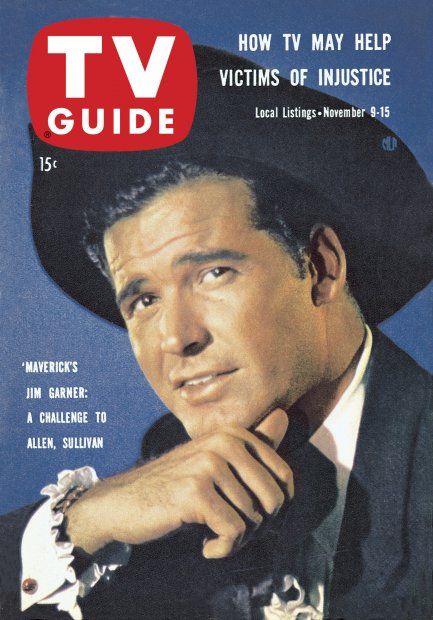
And so, Huggins avoided the dreaded Hollywood Blacklist and continued producing screenplays, most notably a trio of westerns -- Gun Fury (1953), Three Hours to Kill (1954) and the Randolph Scott vehicle, Hangman’s Knot (1952), which also saw Huggins take a rare shot at directing. But by 1955, Huggins shifted gears and mediums, moving to the small screen, taking jobs with Warner Bros. and 20th Century Fox’s TV divisions, where he produced hits like Cheyenne (1955-1963) and Maverick (1957-1962) -- an offbeat western starring James Garner (-- followed by Jack Kelly and Roger Moore), where Huggins guiding principle for his pool of writers went as follows: “In the traditional Western, the situation was always serious but never hopeless. In a Maverick story, the situation is always hopeless but never serious.” Around the same time Huggins also helmed the smash hit detective series 77 Sunset Strip (1958-1964).


Unhappy with how Warners treated him financially during this period, feeling they were constantly cheating him out of owed royalties, Huggins quit and joined Quinn Martin Productions, where he produced his biggest hit yet, The Fugitive (1963-1967), which Huggins always vehemently insisted was not based on the notorious Dr. Samuel Sheppard murder case but was, instead, intended to be a modern-day take on Victor Hugo’s Les Miserable, with David Janssen’s Dr. Richard Kimble as Valjean and Barry Morse’s Lt. Gerard subbing in for Javert, who chases Kimble while he chases down the one-armed man. But by the mid-1960s, Huggins had moved on to Universal, becoming vice-president of the TV division, where he would serve for nearly two decades, launching shows like The Virginian (1962-1971) and The Bold Ones (1969-1972).


And when the 1970s rolled around, after the Butch and Sundance cash-in Alias Smith and Jones (1971), Huggins left the western behind and started telling offbeat detective stories again, with things like Toma (1973) and Barreta (1975-1978), but then reached the absolute zenith of the small screen take on the genre when he teamed up with Stephen J. Cannell for The Rockford Files (1974-1980), once again featuring Garner as a pardoned ex-con turned acerbic and often reluctant detective who knew every scam in the book and could never get into his trailer without getting jumped by a few thugs -- especially if he had just been to the grocery store. Few shows were better. And Cannell, a TV legend himself, who also worked with Huggins again in the 1980s on Hunter (1984-1991), said of the veteran writer/producer, "Roy was in the driver's seat where he belonged. Nobody does it better or with more style...Roy Huggins is my Godfather, my Hero and my Friend. They don't come any better."

Huggins was still producing TV movies based on his properties up until his death in 2002, ending a remarkable career and a ton of hits that ran for nearly four decades. And while his work in film wasn’t quite as indelible, you can still see that Huggins’ “touch” in his screenplays, where ordinary, everyday but very fallible people soon find themselves in something completely over their heads.
Pushover would be one of the last screenplays Huggins would write, and one of its greatest joys is watching the wheels come off as Sheridan’s solid and near foolproof plan to rub out Wheeler, steal the girl and the loot unravels and goes completely awry while his desperate attempts to salvage it only makes things exponentially worse.
In the beginning, it appears this plan will go off without a hitch. And things are helped out considerably due to Sheridan’s partner becoming equally fascinated with Lona’s next door neighbor, a nurse named Ann Stewart (Malone), who is constantly distracted by her as they keep bumping into each other as McCallister lurks about. But this comes back to bite Sheridan in the ass when Ann, looking to borrow some ice for a party, finds Sheridan in Lona’s apartment when he isn’t supposed to be, making her a dangling loose end that will most likely have to be dealt with, and permanently.

And then there’s Paddy, who isn’t where Sheridan needs him to be for this plan to work but is instead inside that bar knocking a few back -- only to reappear at the most inopportune time. And so, Paddy kind of screws the pooch when Wheeler does show up. And when Sheridan’s attempt to soft-strong arm Paddy into accepting why his fellow cop had to kill Wheeler in a clumsy audible, Paddy, a drunk but no fool, doesn’t buy this cock 'n' bull is all about saving his pension at all. And that’s why Paddy moves the car with the money and the body in it on his own. And so that’s also why Sheridan accidentally kills him later when Paddy refuses to say where it is and threatens to turn him in.

And as the cops swarm in due to the gunshot, Sheridan tries to play this off as a suicide. And this buys him some time -- but not quite enough, as McCallister backs his story, having seen Paddy in the bar drinking. But his story starts to fall apart as the lies and spin mount, and Lt. Eckstrum is starting to smell a rat. And as the evidence starts pointing back toward him, Sheridan is soon on the run with Lona, who found Wheeler’s car and the loot in the interim.
And they might’ve still gotten away clean if Sheridan hadn’t detoured to take care of Ann, kidnapping her, leading to pretty cool game of cat and mouse as they try to get their disposable hostage out of the building and through the surrounding police dragnet -- stress on the might’ve.
Now. One of the other great pleasures of watching Pushover is getting to watch both the lovely Kim Novak and the gorgeous Dorothy Malone as the bad girl / good girl foils do their respective thing. I’m still not convinced that wasn’t Novak as the model used to lure Gaucho into making a movie for Jonathan Shields in The Bad and the Beautiful (1953). Either way, Lona McLane would be her first credited screen role. She would officially break out two years later in Picnic (1955), and would go on to torment Jimmy Stewart (and Alfred Hitchcock) in Vertigo (1958).
I think I first encountered Malone in Beach Party (1963), where I officially fell in love. She won an Oscar in 1956 for Written on the Wind but I still contend her best performance was in The Last Voyage (1961), one of the best disaster movies you’ve probably never heard of. Again, I cannot express how much these two drop-dead knockouts in those period fashions are worth the price of a rental alone.

Stitching all of this intrigue and eye-candy together was Richard Quine, one of Sam Katzman’s merry brigade of schlockmeisters making hay in Columbia’s B-units. The film was shot in downtown Burbank near the old Magnolia Theater -- featured prominently in the film. Shot mostly at night, with lots of rain and neon reflecting off the puddles, Quine manages to bring the usual noir trappings into this mounting melodrama, and manages to maintain the tension throughout Pushover as the noose finally closes around our hero’s neck and his journey down this ruinous road comes to its fatal end. A familiar journey, sure, but still well worth the time traveled inevitable or not that ending may be.
Pushover (1954) Columbia Pictures Corporation / P: Jules Schermer / AP: Philip A. Waxman / D: Richard Quine / W: Roy Huggins, Thomas Walsh (novel) / C: Lester White / E: Jerome Thoms / M: Arthur Morton / S: Fred MacMurray, Kim Novak, Philip Carey, Dorothy Malone, E.G. Marshall, Allen Nourse, Paul Richards